Monday, 14 January 2013


Lisbon

The Best Bistro in Town


It´s not only the food, it´s the atmosphere at Bistro 100 Maneiras that i love the most. Don´t take me wrong, the food is fantastic, from one of the best chefs in town, but this is far from being just a place to eat. This is really the best place to start a night out in Lisbon.
Located in Chiado at the doorstep of the Bairro Alto district, this is the second restaurant of chef Ljubomir Stanisic who continues to do things his own way here.
The interior shows a beautiful Art Deco décor, left behind from a previous restaurant.
Spread over two floors, there are views of the river down the hill.
The menu is very similar to that of the first 100 Maneiras, mixing Portuguese and international influences.
It was not from France or Russia, but from their homeland, that Ljubomir imported the name "Bistro".  It means clean and clear in Serbian. Clean and bright kitchen is what is practiced here. Clean and clear is the space, all painted white.
The Bistro 100 Maneiras is open from lunch to dinner. 
Don´t leave without trying the Cheek pork with mashed celery, mushroom risotto and tiger prawns or scallops with asparagus.
At the end ask for a chocolate cake with ginger and curry or a milk-cream vanilla.
There always will be a certainty: the certainty of a "happy ending."

Adress: Largo da Trindade, 9, Chiado - 1200-466 Lisboa, Portugal


Saturday, 12 January 2013

Coimbra

City of Love and Knowledge 


In the center of Portugal you can´t miss the the University of Coimbra. One of the oldest in Europe. Founded in Lisbon by King Dinis in 1290, it was finally transferred to Coimbra in 1537, occupying the buildings of the medieval royal Palace. During the reigns of João V and José I the university was extensively restructured, not only in its teaching but also by the construction of new buildings in Baroque or neo-classical style.


Quinta das Lágrimas, the place to meet romance 


"I wish i was born here!"
Amália Rodrigues


More than just a hotel, a trip back in history. Nature, charm, elegance and new experiences – those are the essence of the Quinta das Lágrimas.

A comfortable retreat in a palace dating from the 18th century, restored in all its grandeur. For centuries a private family seat which was host to kings and emperors, the Quinta das Lágrimas is now open to all who appreciate the art of good living and wish to discover the legend of the love between Pedro and Inês.


The Hotel Quinta das Lágrimas offers three different types of accommodation in the Palace, the Garden and the Spa. The Palace rooms, in which the Duke of Wellington and the 19th-century King Miguel once stayed, have the romantic charm of the past, allowing for a stay in history. The Garden rooms have the serenity and freshness of the Botanic Garden and a view of the scene of the love between Pedro and Inês. The Spa rooms, equipped with hydro massage tubs, feature modern design and offer magnificent views over the Quinta’s woods and the city of Coimbra. 


The Hotel’s kitchen makes use of the traditional regional produce to create unique dishes which change four times a year, according to the seasons. It is a “Market Kitchen” which uses only fresh produce. In the Michelin-starred Arcadas restaurant you can enjoy the flavour of fresh herbs from our garden, and oranges, lemons and avocados from our own orchard.


Thursday, 10 January 2013


Contemporary Art at Fundação Serralves, Porto

Julião Sarmento:White Nights


In Serralves you will find a representative collection of Portuguese and international contemporary art. Untill March in the Serralves Museum of Contemporary Art you can visit the world’s largest-ever retrospective exhibition of the work of Julião Sarmento (Lisbon, 1948). Over the last four decades, Julião Sarmento's work has achieved widespread international circulation, making him one of Portugal’s best-known contemporary artists. His numerous exhibitions over the past decade have been shown in institutions such as the Tate Modern, London (UK), the Pinacoteca do Estado de São Paulo, São Paulo (Brazil), the Fundación Marcelino Botin, Santander (Spain), the Van Abbbemuseum, Eindhoven (Netherlands), and the MNCARS, Museo Nacional Centro de Arte Reina Sofía, Madrid (Spain).


Sarmento's work explores themes of eroticism and sexuality, and questions concepts such as desire, absence, time and language, using different techniques - such as painting, drawing, sculpture, installation, film, photography and performance. In the inaugural session of this new exhibition, the artist will present a series of performances that have been specifically designed for this occasion, which will be performed in Serralves Villa by leading figures from the worlds of fashion, dance and other performing arts.
The exhibition will be accompanied by a major monographic publication on the work of Julião Sarmento, co-published with the prestigious German publisher, Hatje Cantz.


Challenge your Senses 

Largo do Paço in Amarante 

The restaurant Largo do Paço in Amarante (near Porto) worth a visit during your stay in the north of the coutry. Indulge yourself and be surprised with a true feast for the five senses. It seems strange that a space full of refinement, actually a palace, which by nature pays tribute to the past,  shelter  such a innovative and daring kitchen. The service, room and sommelier, is perfect, as if to prepare the ground for the creations of Victor Matos, a chef with as much determination as reliable and of course hand for dishes that delight, one by one,  from the amuse bouche to dessert. The already one Michelin star chef takes the stand as a candidate for a second one. They promise themselves some moments of gastronomic experiences. "The crab and lobster," "The Fall" (egg cooked at low temperature, with wild mushrooms, asparagus and Parmesan foam) and "The Emperor of the Azores and crustaceans" (with oysters poached in white wine from Douro) are titles for later recall. "The Citrus" are a great farewell, tarts with lemon and mandarin 
sorbet with limequat.


Fully fulfilling the Relais and Châteaux Association demands on quality and gastronomical uniqueness, the regional and mediterranean inspired cuisine, turns the Restaurant into a must visit place, which will surely delight you.The restaurant is also perfect for a private family lunch or a business dinner.
In case you wish to experience a complete Degustation Menu, we recommend an early reservation.


Wednesday, 9 January 2013


Douro

Culture, Tradition and of course…the Wine

The Douro is a land of passion and tradition, with a culture that is organically bound to its history, religion, agriculture and to the simplicity of its people. The museums and the more erudite cultural expressions live side by side with the fairs, pilgrimages and adoration of saints.


Those who live in the Douro region have a culture of their own, a regional culture that has great consideration for the past and Nature. Walking through some of the oldest streets you will have the feel of travelling through time and you go back dozens or hundreds of years witnessing history.


Upon reaching the city of Porto, take some of your time to visit the Port wine cellars, where wine, harvested in the terraced Douro, is being stored for centuries. In the Douro Valley you can also find Port wine and table wine cellars. This Is the right place to taste and buy the old ports.
Wine lovers can find a range of activities around the Douro wines. Learn about the farms that produce the famous Port wine, where you can participate in the harvest or stay during your stay. There are marvelous landscapes and the people will love to show you around. 


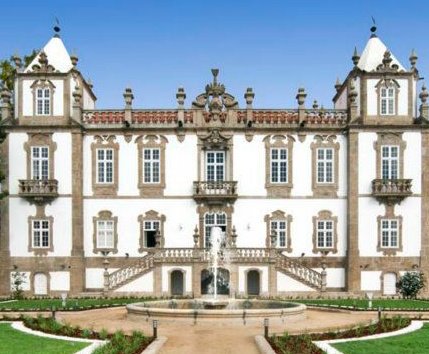
Freixo Palace Hotel

Beauty Sleep in a Palace classified as a National Monument


The Pousada do Porto, Freixo Palace Hotel, opened in October 2009 and is the first Portuguese Pousada in the Oporto city.


 The adaptation of the Pousada do Porto, inserted in a palace which has been classified as a National Monument since 1910, was by architect David Sinclair and decorated by architect James Mitchell. The building is located on the banks of the Douro River, named after the famous Wine Region in Portugal, which dates back to Roman times.


Characterised by its sumptuous eighteenth century construction, the work originally was authorised by the celebrated Italian architect Nicolau Nasoni. Nicolau Nasoni was one of the most significant architects of the Oporto city with an important contribution to the Historic Heritage where attention is also given to the Tower of the Clergy, ex-libris of the city. At the time of construction the Tower of the Clergy was considered to be the highest building in Portugal standing at 75 metres high.
This typical palace was ordered built by the Dean of the Cathedral of Oporto, D. Jerónimo de Távora e Noronha – a wealthy lord within Douro and Minho and responsible for bringing the famous Italian architect to Oporto.
Later the building and its gardens were sold to the Harmony Company who then installed a mill which was extended in the 50s and 60s.

The Pousada do Porto consists of 2 separate buildings which are connected: that of the Palace where you can find the restaurant, the bar, the lounges and the meeting rooms, and the old Harmony mill factory which has 87 comfortable rooms some of which come with a magnificent view of the Douro River.

This hotel in Oporto has on offer in its establishment, a modern Spa where you can relax in the Turkish baths, the heated indoor pool and sauna, as well as being able to book massages.

Inside the Palace you will find the restaurants, which surpass in excellence and that salute the Portuguese cuisine with small contemporary shades which alter seasonally. The lounges and the bar are also areas of comfort and wellbeing.

Outside you can find the gardens with its main feature being the pool and the old pontoon, an irresistible lure to pass the end of the day reinvigorating. The direct access to the river and the long path along the marginal allows the guests easy exploration of the area around the riverside. Enjoy the transfer service to the city and book your transfer at the reception with departures from the Pousada do Porto to the City Centre (Avenida dos Aliados) and vice versa.

The Pousada do Porto is around 2 km from the Campanhã railway station and the Oporto airport is 20 minutes by car, also there is free parking at the Pousada.


Café Majestic, Porto

Where muses, thinkers and artists can get together 


The Majestic Café, designed by architect João Queiróz and inspired in the works of his master Marques da Silva, is still one of the most beautiful and meaningful examples of Art Nouveau in Porto. The building, implanted in the corner between Santa Catarina street and Passos Manuel street in 1916, included already a reference to establishments oriented towards the pedestrian street, as it is also mentioned in the reconstruction description.
The striking marble facade, ornamented with beautiful floral elements and winding shapes, is a good reflection of the decorative style of that time. The main facade boasts two elegant columns and three rectangular windows. Over these, a pediment crowns the composition with the Majestic's initials. On each side, two amused little-boy figures seem to invite people in.
Inside, Art Nouveau is all around in the rectangular-shaped room. The curved symmetry of the wooden frames and the decorative details attract the eyes of any keen observer. The walls are covered with large mirrors showing some aging signs, and holding a few lamps with elaborate metalwork; this creates a clever illusion that this space is larger than it actually is.
Plaster sculptures of human faces, naked figures and flowers confirm the wavy sensual style - two rows of leather seats, which replaced the original ones made of red velvet, create a cozy and elegant perspective of depth.
The winding contour of mirror frames, the lamplight, the marble details, and the smiling busts covering the walls up to the ceiling, give the café a golden and comfortable atmosphere that fosters relaxation and easy chatting. The Majestic breathes luxury, refinement and comfort.
The inside patio, built in 1925, is a retreat of delicate contours, with a staircase and a small balustrade, designed as a conservatory. Under the supervision of master Pedro Mendes da Silva, this corner of the café was a symbol of a new era for Majestic. A bar was built and connected to the café through a staircase, thus allowing the opening of another entrance in Passos Manuel street, "...where Port wine would be sold. This is the reason why a regional style Portuguese architecture was chosen, not only for the bar but also for the outside wall".

The new facade was designed and built in a different style from the international interiors of the café - this new space, without totally clashing with the previously existing one, presented a more rural style representing what Raul Lino would later call the casa portuguesa (traditional portuguese house).
That same year, the Majestic served the tastes of a varied clientele. Once again architect João Queiróz was called in to design a new modest, yet gracious shop window in the restored wall, overlooking Passos Manuel street used to sell tobacco and rappee. A year later, in 1926, this area was enlarged and leased to Tinoco & Irmãos Company and was transformed into a "small cabinet (...) selling tobacco".
In 1927, with new times and new ways ahead, the bar was expanded to "provide and serve beer in the existing terrace". This terrace area contains several moods. From the pure and architectural style of the entrance, reflecting the architect's Beaux Arts roots, we pass on to the decorative style garden crowning the architectural structures and ending up in a Ionian doorway, that makes the connection with the outside facade, including large, transparent and sensual spiral shells, in the typically modern style, which anticipate the feminine sculptures on the outside. The leafy and luminous conservatory is currently used in the summer for music concerts, playing the role of Majestic's third cultural space. It may be hard to choose between this and the grand piano area inside the café or the art exhibitions that take place in the ground floor, previously occupied by the pool tables.

In 1992, under the auspices of the Barrias family, the café closed down for a refurbishing project to be carried out under the supervision of architect Teresa Mano Mendes Pacheco.

In 1994, after the interior floors were replaced and the original furniture was restored, the Majestic reopened for business. Some photographs found by Fernando Barrias conveyed the original spirit of this place and allowed its luminous past to be sensitively reproduced in the present.